Tuesday, 15 November 2016

Differential expression of endothelial nutrient transporters (MCT1 and GLUT1) in the developing eyes of mice
Ayuko Kishimoto, Hiromi Takashi-Iwanaga, Masahiko Watanbe M, Toshihiko Iwanaga

The paper can be accessed here.


 Introduction

Endothelial cells at the blood brain express glucose transporter (GLUT)-1 for uptake of glucose, but also express monocarboxylate transporters (MCT), which are required because neonates depend on monocarboxylates derived form milk as a source of energy. Within adults, all blood tissue barriers, including the blood retina barrier, express both GLUT1 and MCT1.

During development, a special hyaloid vascular system develops as part of the ocular vascular system, which degenerates during later stages of development of the eye. The hyaloid artery branches into tunica vasculosa lentis (TVL) at the lens and the vasa hyaloidea propria (VHP) along the internal surface of the retina. In later stages of development, the hyaloid artery, along with its branches regress, as the central artery and its six branches develop to form the permanent vasculature of the eye supplying blood to the inner two thirds of the retina. As within the central retinal artery, tight junctions between the endothelial cells of the hyaloid artery limit diffusion into the perivascular space. This results in the need of transporters such as GLUT1 for transport of nutrient across the blood-retina barrier.

This study investigates the morphology of ocular vessels expressing GLUT1/MCT1 to characterize the new development of blood vessels differentially expressing GLUT1 and MCT1 in the eye.

Methods

Eye samples were obtained from embryos, neonates of postnatal day 0-3, 5, 7, 9, 11, 13, 15, 20 and 25 as well as adult mice. The retina and lens were isolated from these eyeballs. Immunohistorchemistry was performed on samples, and to obtain double immunoflourescnce, the samples were incubated with anti-MCT1 antibody, ant-GLUT1 antibody and anti-CD31 antibody.

Silver intensified immunogold staining was used for electron microscopy, where frozen sections were incubated with an anti-MCT1 antibody followed by a secondary antibody covalently linked with gold particles. Subsequently, the samples underwent silver enrichment and were stained with uranyl acetate and lead citrate for observation under an electron microscope.

For scanning electron microscopy, posterior sections of the eyeballs and sections of the cerebral cortex were obtained, prepared and coated with osmium in a plasma osmium coater. The samples were then examined with and SEM at an acceleration voltage of 5kV.

Results

Hyaloid Vascular system

In fetuses, the VHP (on the surface of the retina) and VTL (on the lens) of the hyaloid vascular system both possess GLUT1 transporters. The VHP had GLUT1 transporters running along the entire length, with a few MCT1 expressing cells dispersed within the endothelium f neonates. The frequency of MCT1 expressing cells was higher at the periphery of the VHP.  In the VTL, GLUT1 transporters were present throughout, but MCT1 transporters were dispersed at the posterior and lateral surfaces of the lens. The hyaloid vascular system, present only in early stages of development, expressed GLUT1 along its entire length, whereas retinal and brain endothelia predominantly express MCT1 in early stages of development. 
Fig. 6
Fig. 6. An equatorial view of a lens stained for MCT1 and GLUT1. Some MCT1-expressing vessels intermingle with GLUT1-expressing vessels of the TVL. Bar 200 μm.

Vascular systems in the developing retina

Vascularisation of the retina begins at birth. Up to day 3, growing capillaries do not have either GLUT1 or MCT1 transporters. Around postnatal day 5, MCT1 transporters begin to appear in the retina near the optical disc and spread into the superficial layer of the retina by till day 7. Neither GLUT1 nor MCT1 is observed in the central retinal artery or any of its six branches. However, the veins and capillaries both expressed MCT1. A dense sprouting, dense around the vein but scarce around the artery, did not express MCT1 or GLUT1. The sprouting began near the optic disc at day 0 and extended to t hora serata by day 9. During angiogenesis, desmin (a component of muscle specific intermediate filaments) was expressed in pericytes and the smooth muscles cells of the vessels. The pericytes were found around MCT1 expressing central plexus. GLUT1 transporters increased slowly in the ocular vessels after day 11, and at day 20 were comparable to the frequency of MCT1 transporters. At day 25, the GLUT1 transporters appeared to be more dominant than MCT1 transporters.

Radicular Projections

MCT1 expressing capillaries displayed long projections of uniform thickness that did not branch dendritically. These were not filopodia as the were around 5um in thickness, whereas filopodia are thicker. These projections were not associated with pericytes and were seen singly or in small groups all along the capillaries. These projections were also seen around veins expressing MCT1 but not in arteries, which had no MCT1. These projections were most dense on days 5 through 11, the mid-stage for suckling, and were absent by day 20. These projections were also found in capillaries of the neonatal brain.

Fig. 12
Figure 12. Scanning electron micrographs of capillary vessels in the retina at neonatal 7 days. The extracellular matrix has been thoroughly removed by alkaline maceration to expose the surface of endothelial cells. Many radicles project from the outer surface of endothelial cells (E). Bars 10 μm (a), 1 μm (b).
Discussion
The hyaloid vascular system initially only expressed GLUT1, whereas retinal capillaries and veins expressed MCT1. This may be because the hyaloid vasculature is a temporary vascular system. Also, MCT1 expressing endothelial cells were present amidst GLUT1 expressing endothelial cells in hyaloid vessels, indicating specific regulation of MCT1 and GLUT1 during angiogenesis, a patter not observed in the brain.

Capillaries and veins of the developing retina predominantly express MCT1, likely in response to the presence of monocarboxylates from milk as a source of energy. Also, in the developing eye, the shift from MCT1 to GLUT1 expression occurs after weaning. During angiogenesis, arteries did not express any MCT1 or GLUT1.

The radicular projections observed in the SEM were a surprising feature in this research. These were found in MCT1 expressing cells in both the retina and the brain. These projections may indicate a novel feature in vessel growth present in both retinal and brain endothelium and may be related to the use of monocarboxyaltes as an energy source.
The overall findings showed that differential expression of MCT1 and GLUT1 occurs in the ocular vasculature during development. Some of these features observed in the blood-retinal barriers can be seen in the blood-brain barrier as well. The presence of radicular projections indicate a novel feature present in angiogenesis.


Critique

This paper was an easy read, with the introduction covering all the information required to understand the research. The layout was also easy to follow, and the text of the body as well as the figures were large enough to read. The figures were extremely clear with straightforward explanations. There was no unnecessary, excessive information in the paper, making it a simple read.

The research itself was very straightforward, with three procedures. The paper explains development of vaculature in the eye in an excellent way, describing all the vessels and arteries  present during different developmental stages. It took into consideration previous research on vasculature in the eye as well as energy transporters present within the vasculature of both the eye and the brain. Incorporating previous research into their paper, the authors were also able to correct errors that arose in previous studies. A great component of the paper is that the researchers came across a novel feature of the developing vessels in the eye and brain whilst trying to understand development of blood vessels in terms of expression of endothelial transporters. This novel feature gives the paper an edge in terms of possible future research. 

The overall quality of this paper and research is excellent. However, there were some issues in the paper. The discussion mostly reiterates the results and does not expand on possible reasons of why certain results were obtained or try to provide causative information on their results. In addition, I think that the research should have been conducted on the eyes at the first 30 postnatal days in order to ensure complete understanding of developmental stages. Often times, the researchers found that a process appeared sometime between to study dates, but were not able to state the exact time of development. I believe that in a developmental study it is important to know exact timing of each developmental stage.
Whilst some aspects of the experimental design and the material of the discussion may be lacking, the paper, in general, does a wonderful job at investigating differential expression of nutrient transporters in developing ocular vasculature and opens the door to further research regarding endothelial development in the eye as well as the brain.

References

Kishimoto A., Takashi-Iwanaga H., Watanabe M., Iwanaga T., 2016. Differential expression of endothelial nutrient transporters (MCT1 and GLUT1) in teh deloping eyes of mice. Experimental Eye Research. 153:170-177.


Sunday, 23 October 2016

The Eye

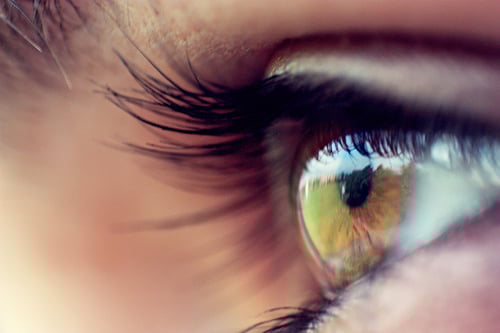
Image result for eye reflectingLiving organisms are equipped with 5 senses that allow us to perceive and interpret our surroundings, with sight being one of the most vital of these senses. A set of eyes enable us to see the world around us by converting light waves into electrical impulses that the brain can perceive. But the eyes are much more than that. Not only do they allow us to connect to the external world through vision, they also project the inner emotions of people to the external world! The eyes are a complex organ made of intricate structures and layers, which you will learn more about in this blog.

Origin and Evolution

Most organisms depend on light in some way or another. Even the more primitive species required and responded to light as an energy source: plants turn their leaves to face the sun; some algae and other microorganisms swim towards or away from light. The eyes evolved from simple light absorbing structures such as chlorophyll. The first eyes, called eye spots, are thought to have been clusters of photosensitive cells within pigmented pits that provided directional information to organisms. These pits randomly became deeper, producing sharper images. Subsequently, the opening narrowed producing pinhole eyes.  The greatest advance in eyes came when organisms gained the ability to produce images from the light they collected. These image producing eyes are of two types; camera eyes and compound eyes4,7.


Image result for camera vs compound eye 
Source: http://news.nationalgeographic.com/content/dam/news/rights-exempt/nat-geo-staff-graphics-illustrations/2016/01/Evolution_Eyes/eye_evolution_645.jpg?06

Camera eyes are found within both vertebrates and invertebrates whereas compound eyes are only present in invertebrates. Compound eyes are composed of many smaller eyes known as ommatidia.  Since compound eyes are made of many ommatidia, the organism can look in multiple directions at the same time. In contrast, camera eyes are composed of a single lens and so the direction of vision is more limited in camera eyes than in compound eyes4,7. However, camera eyes are able to produce much sharper images because of the abundance of photosensitive cells present as well as their ability to control the amount of light entering the eye. In compound eyes, each ommatidium only has a few photosensitive cells and does not possess the ability to adjust the light; producing images of poorer quality. Thus we see that the camera eyes of humans and animals such as eagles required billions of years to perfect4,7


Structure and Funtion of the eye


http://healthfavo.com/wp-content/uploads/2013/08/human-eye-diagram-labeled.jpg
CorneaA transparent, curved layer that acts as the first lens of the eye and lets light enter1
Sclera: A thin opaque layer of connective tissue that acts as a supporting wall, lending rigidity. It begins at the end of the cornea1.
Pupil: The dark coloured aperture that allows light to enter into the posterior section of the eye1.
Iris: a pigmented circular muscle that surrounds and controls the size of the pupil1
Lens: is a transparent body that focuses the light onto the retina1
Retina: The innermost layer of the eye containing photosensitive cells that respond to light1.
Chambers of fluid:  There are three fluid filled chambers in the eye; the Anterior Chamber (between cornea and iris) the Posterior chamber (between iris  and lens) and the Vitreous chamber (between lens and retina) which provide structural integrity to the eye and prevent it from collapsing1.
Choroid: A vascular layer that sits between the retina and the sclera and nourishes the surrounding layers1.
Eyes are located in spherical cavities within the face known as orbits. The eyes are covered by a thin layer of skin known as the eyelid, which serves to keep them moist. Together with small hairs located at the edge (known as eyelashes), the lid also serves to protect the eyes from dust and debris.


Pathwhay of Light in the Eye

What is the path of light through the eye?
https://aos.iacpublishinglabs.com/question/aq/700px-394px/NULL_38229003d3d8213b.jpg?domain=cx.aos.ask.com

The eye itself is a complex structure made up of many layers.  the external surface of the eye is made of a thin layer of connective tissue, known as the sclera. This opaque white layer gives the eyeball its white colour and forms part of the supporting wall, thereby protecting the eye1
At the anterior end of the eyeball is a transparent, curved layer known as the cornea, which serves as the first lens of the eye as it helps to focus light as it initially enters the eye. The pupil is the dark coloured aperture that allows light to enter into the posterior section of the eye. It is black due to the presence of absorbing pigments. The coloured layer around the pupil is known as the iris.  This is a pigmented circular muscle that controls the size of the pupil via a process known as the pupillary reflex. In a bright environment, the iris causes the pupil to constrict, allowing very little light to enter. In low light areas, the iris causes the pupil to dilate, allowing more light to enter the eye1.
 Behind the iris is a transparent body known as the lens. The lens serves to focus the images onto the retina. For objects close by, the lens becomes thicker by the relaxation of ciliary muscles. To focus on objects at a distance, the ciliary muscles contract, causing the lens to elongate. Once the light has focused, it hits the retina, a layer which contains photoreceptors. These are the light sensitive cells present in the eye that respond to the light. The macula is the most sensitive region of the retina as it has the highest density of photoreceptors. Light is most often focused onto this region as it produces the most detailed images due to the abundance of photoreceptors. The photoreceptors are connected to nerve fibres, which bundle up to form the optic nerve. Once light hits the photoreceptors, it is converted into an electrical signal that is carried to the brain by the optical nerve1.


Histology

They eye is composed of three main layers; the outermost layer is called the fibrous layer and is composed of the cornea at the and the sclera. The middle layer is a vascular layer that includes the choroid, ciliary body and the iris. The innermost layer is known as the neural layer and this consists of the retina2.

Image result for fibrous vascular and neural cell layers of eye


Fibrous Layer
The external surface of the cornea is covered with non-keratinized stratified squamous epithelium, with columnar cells sitting at the basement membrane. Below the epithelial layer is an acellular region of collagen bundles known as Bowman’s membrane2. The stroma (also known as substantia propria) is the body of the cornea, composed of laminae of collagen fibrils. Some elastic fibrils are also present within the lamina. Flattened fibroblasts as well as some macrophages and leukocytes can be found between the lamina. Below the stroma is the acellular basal lamina of the posterior epithelium layer composed of collagen. The posterioir corneal epithelium is composed of a single layer of cuboidal cells.
https://blogger.googleusercontent.com/img/b/R29vZ2xl/AVvXsEjF3H5fE6ZFVF2yHclJJbQDTXzZJbcpBNjD3Eg7VRDnn3RIB6vD2DeWX6I_J-rdnxdk7lvxOdtwFCPQZQ_PtaT_le6Wyhx1iqIzxge193FmBbXFMOWOjME3GBIID0Ne6Kx4zUgLFy9eeXU/s1600/cornea.png

Image result for lamina cribrosa
Lamina cribosa

The sclera is a dense layer of connective tissue that extends from the cornea. The corneal limbus is the reigon of junction between the two. Like the cornea, the sclera is composed of dense bundles of collagen fibres with flattened fibroblasts scattered in between. Elastic fibrils are also present within the scleraToward the posterior end, near the optic nerve, the sclera becomes a thin fenestrated membrane known as the lamina cribosa. The sclera fuses into the dura of the the optic nerve2,3.


Vascular Layer
The vascular layer is composed of the iris, ciliary body and the choroid.

Image result for iris histology
http://clinicalgate.com/wp-content/uploads/2015/03/B9781437719260100037_f03-05-9781437719260.jpg

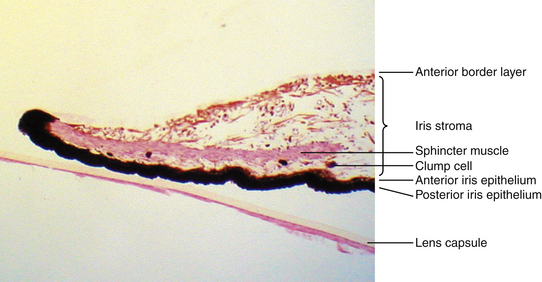
The iris is composed of four layers: (1) the anterior border densely lined with pigmented or non-pigmented cells. (2) The stroma, composed of loose vascular pigmented connective tissue with melanocytes (pigmented cells that are absent in blue eyes), fibroblasts and phagocytes. (3) The dilator muscle layer (4) Posterior epithelium, made of two layers of pigmented epithelium. At the inner border of the iris, where the pupil is formed, lie the smooth muscles of the sphincter muscle of the iris2,3.

The choroid is a richly vascularized region also composed of four distinct layers (in order from the sclera to the retina): (1)The suprachoroid layer is similar to the sclera and is composed of lamellae of collagen fibres with scattered elastic fibres and interspersed fibroblasts, macrophages and melanocytes. (2) The vascular layer is composed of large muscular vessels. The stroma of the vascular layer is composed of loose connective tissue withy interspersed melanocytes. (3) The choriocapillary layer has a stroma made of fine collagen and elastic fibres, with large capillaries present within the stroma. (4) The Lamina Vitrea layer is the basal lamina of the pigment layer of the retina and i composed of two layers of collagen fibres with elastic fibres in between2,3.
media/image1.jpeg
1: Sclera; 2: Suprachoroid; 3: Large-sized- vessel layer (Haller´s Layer); 4: Medium-sized-vessels; 5: Choriocapillaris; 6: Bruch´s membrane; 7: retinal pigment epithelium.


http://www.intechopen.com/source/html/37889/media/image1.jpeg


Neural Layer

Image result for retina histology
Source: http://image.slidesharecdn.com/eyeballseminar-131023063711-phpapp01/95/eyeball-anatomy-with-histology-16-638.jpg?cb=1382510421
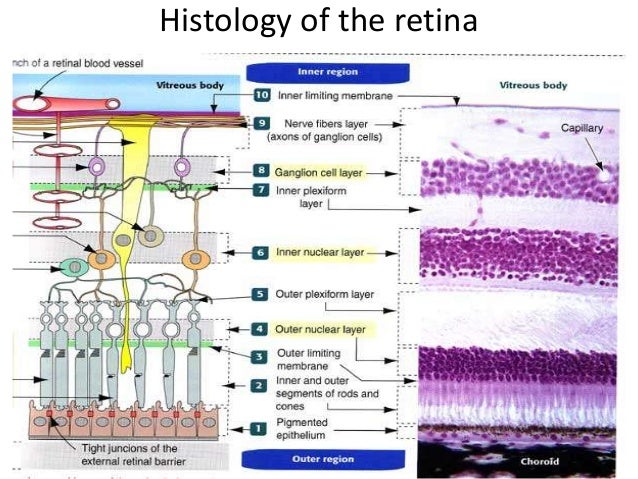
The neural layer is the retinal layer, composed of nine distinct regions (starting externally from the choroid):
(1) The outermost layer is the pigment epithelium, formed of a single layer of cuboidal cells that contain pigment in the apical region. Extending into the adjacent layer are processes of pigment granules. The pigment epithelium is separated from the photoreceptor layers by the subretinal space.
(2) The second layer is composed of photoreceptor cells: thin rod cells         and thicker cone cells. 
(3) The outer limiting membrane lies beneath the layer of rods and cones. The processes of neural cells known as Muller’s cells can be found within this layer.
(4)The outer nuclear layer contains the nuceli of rods and cones as well as the outer processes of the Muller cells.
(5) The outer plexiform layer is where the prhotorecptive cells from synapses with the the processes of neural cell cells, the bodies of which are present in the subsequent layer.
(6) The inner nucler layer contains the nuclei and cell bodies of  three types of neural cells: amacrine cells, horizontal cells and bipolar cells as well as the nuclei of the Muller cells. This is where the intial processing of the senscory input occurs.
(7)The inner plexiform layer is where the axons of the bipolar cells (whose bodies are in the inner nuclear layer), synapse with the dendrites of ganglion cells, whose bodies are present within the subsequent layer (Layer 8).
(8) The ganglion cell layer houses the large multipolar ganglionic cell bodies as well as scattered neuroglia. These cells are more abundant near the fovea, but less so near the periphery of the retina.
(9) The layer of optic nerve fibres contains the axons of the ganglion cells from the ganglionic cell layer and the inner processes of the Muller’s cells. The axons travel towards the optic disc, where they gather  and converge, forming the optic nerve.(10) The inner limiting membrane is the basal lamina composed of the terminations of the inner fibres of Muller’s cells2,3,6.
(10) The inner limiting membrane is the basal lamina composed of the terminations of the inner fibres of Muller’s cells.

The following video provides a general summary of the pathway of light in the eye and of the retinal layers: 


Pathology

Age related macular degeneration
A major cause of blindness for seniors in North America, macular degeneration is a disease caused by defects in Burch’s membrane. The membrane becomes fenestrated and thickens, cuasing blood vessels to grow through into the retina, which can leak fluid into the retina causing atrophy of the pigment epithelium. If the blood vessels leak, a hemorrhage can occur, effecting the quality of vision.  AMD can also be of the dry form wherein drusen, dried lipids and fatty protein, can accumulate between the pigment epithelium and Burch’s membrane6.

Diabetic retinopathy

Diabetic retinopathy is a diabetic eye disease that can affect people with diabetes. High blood sugar can damage the vessels present in the small blood vessels at the back of the eye, causing hemorrhaging, which in turn lead to swelling and decreased vision. Another way diabetic retinopathy can deteriorate vision is by causing swelling of the macula causing macular edema, which may cause blindness6.


References:

((1) Kolb, H., Nelson, R., Fernandez, E., & Jones, B. (Eds.). (n.d.). Webvision. Retrieved October 25, 2016, from http://webvision.med.utah.edu/

(2) Hinrichsen, C. (1997). Organ histology: A student's guide. Singapore: World scientific.

(3) Eroschenko, V. P., & Fiore, M. S. H. (1996). Di Fiore's atlas of histology with functional correlations. Baltimore: Williams & Wilkins.

(4) Markgraf, B. (n.d.). Insect Compound Eye vs. Human Eye | The Classroom | Synonym. Retrieved October 25, 2016, from http://classroom.synonym.com/insect-compound-eye-vs-human-eye-22657.html

(5) Ophthalmic Pathology: Altas Web Site. (n.d.). Retrieved October 25, 2016, from http://www.ouhsc.edu/ocupath/
(6) Slomianka, L. (2009, August 5). Blu Histology -The Eye. Retrieved October 25, 2016, from http://www.lab.anhb.uwa.edu.au/mb140/corepages/eye/eye.htm#retina

(7) Yong, E. (2016, January 14). Inside the Eye: Nature's Most Exquisite Creation. Retrieved October 25, 2016, from http://ngm.nationalgeographic.com/2016/02/evolution-of-eyes-text